As an American navigating through the Middle East, I'm in a somewhat
unique position in terms of the recent tragedies across the world
(IS/ISIS, ebola, cruel deaths). Being on this side of the
world has thrown me closer to middle eastern politics by necessity and
my heart cries out for the injustices executed back home and in nearby
countries.
These recent tragedies forced me to take a
step back and re-observe life from a different perspective. Usually I
share my blog posts on FB but I'll let this one sit here quietly as a
reminder for my future self. Without further adieu, here are 3 lessons
traveling taught me about life:
1. Life is short
I
unwillingly reflect and struggle with the concept of death every night:
fear of my own death, impending deaths of my loved ones & deaths of
loved ones already passed. In light of these recent events though I was
slapped by a reminder of just how short life can be: 18 years for an
unarmed black teenager, 63 years long for a depressed celebrity, 6 years
cut short for a victim of terror.
While income, gender
and race influence lifespan estimates, life is too short to hold
grudges or be unhappy. We were all blessed and cursed to have
experienced life and eventually it will be ripped away... all we can do
is enjoy the ride.
Quote for this lesson: "Stop "tomorrowing" yourself to the end of your life"
2. Life is precious
Everyone
you meet is facing a tough battle of some kind- yes, including
privileged people. Why waste energy angrily trying to dictate how
someone else should live their life? You do you, let them do them. You
could be shocked by how little others' private decisions affect you.
Death- especially with all the recent worldwide tragedies- should serve
more as a reminder to celebrate and enjoy life. We're all just trying to get by.
"There are those who think that life is
valueless because it comes to an end. They fail to see that the opposite
argument might also be proposed: that if there were no end to life,
life would have no value; that it is, in part, the ever-present danger
of losing it which helps to bring home to us the value of life"
3. Life is what we make of it
Our
media-obsessed generation tunes into daily tragedies from America to
the Middle East and has become depressed as a result. Don't get stuck on
depressing social media news stories! Get up, go outside and get
involved with something positive you can do instead. Channel the
negative energy into a positive outlet.
An hour per
week at a soup kitchen... donating money to a charity... recycling
clothes among friends... sharing excess items with the needy... it's not
just about "be the change you wish to see in the world" but you quite literally are the change happening in the world. As much as we might like to deny it, every in/action you take shapes the future so don't let the feeling of hopelessness move you to behave powerlessly.
"Change the way you look at things and the things you look at change"
"There are always flowers for those who want to see them"
Sunday, September 28, 2014

Sunday, September 21, 2014
How to Haggle: A Foreigner's Guide
One night my friends and I were sipping martinis at Nic's bar on Canon Drive in Beverly Hills when a salesgirl approached our table and attempted to sell us a bottle of vodka. When no one spoke, I asked if we could try a sample first. Surprisingly, she returned a few minutes later with shots for potential buyers and I learned a great lesson: it never hurts to ask.

For many Westerners the concept of haggling may appear rude or shameful, but it's perfectly routine and even expected in other countries. In today's post I'll share a foreigner's guide on how to haggle, including what it is, when it's appropriate and best practices for successful haggling.

2) No Touching. When asking for an item's price, don't touch it - just point to it. 2 reasons not to touch an item: 1) it shows interest so the owner will inflate the price, and 2) it creates an artificial feeling that you already own the item & makes you more willing to spend more to have it.
3) Stay Quiet. Don't make the first offer - it puts the seller in a position of power to charge you more. After the merchant names their price, ask for up to 50% off. When the seller makes a counteroffer, pause or say "hmm" before responding to make yourself seem less willing to buy.
4) Be Observant. Examine the item for imperfections, or use your earlier knowledge of going rates to justify your price and make you seem like a smart shopper.
5) Walk Away. Ultimately the goal is to leave satisfied, right? That includes walking away when an item's value isn't worth its asking price & 5 more minutes of back-and-forth won't achieve a happy medium for either party, so be prepared to walk away from a transaction.
 BONUS TIP: If traveling between
seasons (e.g. Summer to Fall), arrive early since merchants will happily
sell their extra off-season goods in order to make room for new items.
Alternatively, arrive an hour before the market closes to capitalize on
merchants' eagerness to get rid of unsold merchandise and make an extra sale.
BONUS TIP: If traveling between
seasons (e.g. Summer to Fall), arrive early since merchants will happily
sell their extra off-season goods in order to make room for new items.
Alternatively, arrive an hour before the market closes to capitalize on
merchants' eagerness to get rid of unsold merchandise and make an extra sale.
When traveling and shopping abroad, it doesn't hurt to ask for a lower price. Done right, haggling should be a fun and mutually profitable experience for both the seller and buyer. Have you ever haggled in a foreign country? Share where and what it was like in the comments!
What is Haggling?
Simply, haggling is bargaining over the price of an item. You may have already haggled over the price of your car, house or expensive jewelry; or perhaps you haggled for smaller items at a garage sale. If you did it right, both you and the seller left the transaction feeling satisfied.When Should You Haggle?
Typically haggling is encouraged when item prices are unlisted. In foreign countries you can haggle for goods and services from clothing to hotel room prices - check Google for "haggling customs [LOCATION]" to learn when haggling is appropriate.5 Best Practices to Haggle Successfully:
1) Be Patient. Try not to buy anything from the first place you shop; instead, first look around at what's being offered at various shops and for how much to get an inside look at supply and demand.2) No Touching. When asking for an item's price, don't touch it - just point to it. 2 reasons not to touch an item: 1) it shows interest so the owner will inflate the price, and 2) it creates an artificial feeling that you already own the item & makes you more willing to spend more to have it.
3) Stay Quiet. Don't make the first offer - it puts the seller in a position of power to charge you more. After the merchant names their price, ask for up to 50% off. When the seller makes a counteroffer, pause or say "hmm" before responding to make yourself seem less willing to buy.
4) Be Observant. Examine the item for imperfections, or use your earlier knowledge of going rates to justify your price and make you seem like a smart shopper.
5) Walk Away. Ultimately the goal is to leave satisfied, right? That includes walking away when an item's value isn't worth its asking price & 5 more minutes of back-and-forth won't achieve a happy medium for either party, so be prepared to walk away from a transaction.
When traveling and shopping abroad, it doesn't hurt to ask for a lower price. Done right, haggling should be a fun and mutually profitable experience for both the seller and buyer. Have you ever haggled in a foreign country? Share where and what it was like in the comments!
Sunday, September 14, 2014
KIT with Travel Friends by Asking These 7 Questions
Keeping in touch with new friends you made while on vacation or traveling can be tricky since you relate to them differently from lifelong friends; this goes doubly so for socially anxious travelers who may not know what to say when catching up with travel friends.

The best way to overcome this difficulty is by making repeated attempts
to initiate contact e.g.
liking/commenting on Facebook statuses, chatting on Kik or Whatsapp. But, what can you actually say when trying to reconnect with your travel buddies? Answer: ask travel-related questions! People love
talking about themselves so here are 7 travel-friend-specific
questions you can ask to help KIT:
Non-travel related questions can include FORD topics (Family, Occupation, Recreation, Dreams).

As a social traveler with friends in several countries, I know it becomes difficult to keep in contact with anyone over time due to evolving life stages and keeping in touch with friends made while traveling can be especially tricky. It's still possible to maintain deep, new lifelong friendships though as long as we make an effort to KIT. Happy traveling!
- Have they revisited the place you both traveled to and have they picked up more of the language?
- Do they plan on traveling anywhere else? Where else would they like to go?
- Have they met any other travelers on their journey? What was that experience like?
- Would they like to share pictures from their latest travels with you?
- Where do they recommend as your next travel spot?
- Which websites or apps have they had the most luck with in terms of booking travel arrangements e.g. transportation, housing?
- Do they know of any useful travel blogs or tips for visiting a certain city or country? Are there any problems or scams you should look out for?
Non-travel related questions can include FORD topics (Family, Occupation, Recreation, Dreams).
As a social traveler with friends in several countries, I know it becomes difficult to keep in contact with anyone over time due to evolving life stages and keeping in touch with friends made while traveling can be especially tricky. It's still possible to maintain deep, new lifelong friendships though as long as we make an effort to KIT. Happy traveling!
Sunday, September 7, 2014
Life in Ankara, Turkey
Like many other Americans, I harbored some reservations about Turkey when my fiance first suggested the idea of moving abroad. Now, tomorrow marks 6 months since we landed in Ankara and I'm dragging my feet in planning our next destination.

Ankara, Turkey holds a population of 4.5 million+ and is second only to Istanbul which boasts a population of 14 million+ people. If Istanbul is the Beverly Hills of Turkey, Ankara is the Westwood Village. Ankara is an active but cozy city while Istanbul is decidedly more impressive and boisterous. In sum: Istanbul is for vacationing while Ankara is for living.


In 2012 when my fiance visited Ankara for work, I asked him to describe the city for me. At first I was frustrated trying to understand how it could be "peaceful" and "politically unstable" at the same time but upon arriving I soon learned what he meant.
Most people are just trying to live their lives, attending state universities for free or working 60 hours/week. Political unrest exists but mostly rises following elections like the recent one wherein Erdogan, the former Prime Minister of Turkey, was elected President.
As the center of Turkish government, Ankara houses all foreign embassies. I visited the US embassy earlier this year when I unknowingly misplaced my passport in a taxi. Within 24 hours the embassy discovered which hotel I was staying at-despite the fact that my name wasn't even on the hotel records-and called for me to retrieve it. Thanks, NSA. Honestly it was scary, but reassuring that at least as an American I'm always safe here.


Since my fiance and I are both fortunate enough to work from home, most of our free time is spent cooking new foods (I can no longer live without Ottoman spice), taking walks in the park and practicing limited Turkish with our friends at the local grocery store Cagdas (pronounced Chadash).
While it hasn't all been sunshine and daisies, I've fallen in love with Ankara. There's a local Turkish saying that "the most beautiful part of Ankara is the road to Istanbul" but I don't mind - this way Ankara remains a hidden gem away from tourists for me to enjoy.

Good night Ankara, good afternoon Los Angeles!
*Note: I do not own any of these photos
Ankara, Turkey holds a population of 4.5 million+ and is second only to Istanbul which boasts a population of 14 million+ people. If Istanbul is the Beverly Hills of Turkey, Ankara is the Westwood Village. Ankara is an active but cozy city while Istanbul is decidedly more impressive and boisterous. In sum: Istanbul is for vacationing while Ankara is for living.

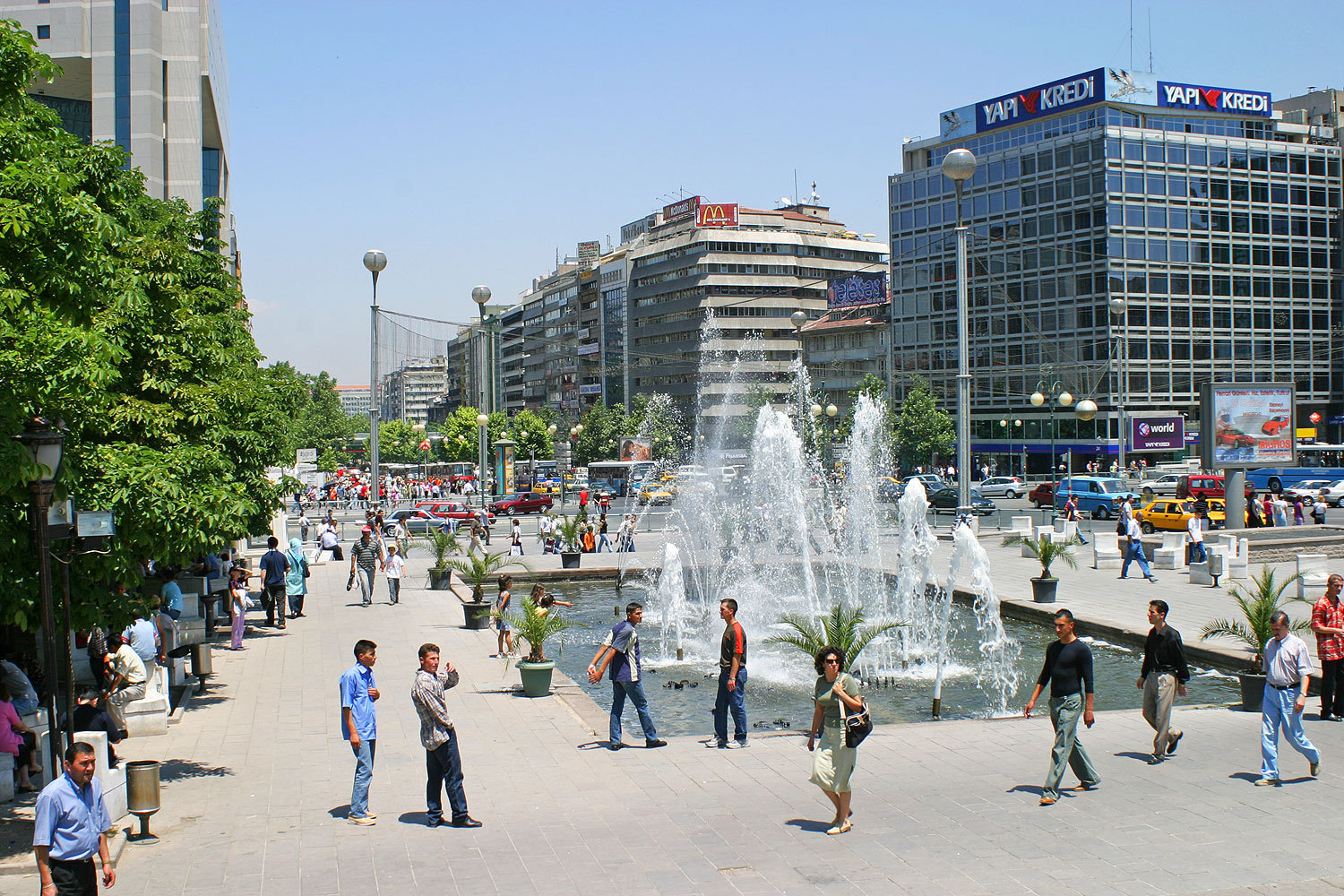
In 2012 when my fiance visited Ankara for work, I asked him to describe the city for me. At first I was frustrated trying to understand how it could be "peaceful" and "politically unstable" at the same time but upon arriving I soon learned what he meant.
Most people are just trying to live their lives, attending state universities for free or working 60 hours/week. Political unrest exists but mostly rises following elections like the recent one wherein Erdogan, the former Prime Minister of Turkey, was elected President.
 |
| Kocatepe, the largest mosque in Ankara, can accommodate 24,000 people |


Since my fiance and I are both fortunate enough to work from home, most of our free time is spent cooking new foods (I can no longer live without Ottoman spice), taking walks in the park and practicing limited Turkish with our friends at the local grocery store Cagdas (pronounced Chadash).
While it hasn't all been sunshine and daisies, I've fallen in love with Ankara. There's a local Turkish saying that "the most beautiful part of Ankara is the road to Istanbul" but I don't mind - this way Ankara remains a hidden gem away from tourists for me to enjoy.
Good night Ankara, good afternoon Los Angeles!
*Note: I do not own any of these photos
Sunday, August 31, 2014
5 Items You'll Forget When Moving
Recently I chatted with a friend who just moved apartments & was reminded of all the headache-inducing items I forgot to plan for when we first moved. Please learn from our mistakes - don't forget to plan for these 5 items when moving:
1) Cleaning Supplies
Brooms, dishwashing gloves and chemicals are easily forgotten when you've spent all week packing and cleaning. While you could potentially leave these items for the next tenant, consult your landlord or leasing agreement first to confirm you won't ironically be charged a clean-up fee.
2) Trash Cans
Related to #1, you've likely forgotten to plan for kitchen and bathroom trash cans and recycling bins. Save the car space - leave these in the alley next to the dumpster with a "FREE" sign for any potential drive-by takers and good karma.

3) Neglected Clutter
That dusty box in the attic containing all your birth and financial records... The living room drawer housing both junk mail and forgotten sentimental items... Clear out the clutter 2 weeks in advance to give yourself enough time to determine what's essential.
4) Opened Food
Don't waste precious car space or risk spills transporting cereal, rice, coffee or any other open foods. Instead, arrange to donate opened food to a close neighbor or friend & treat yourself to a Starbucks breakfast on the day-of.
5) Spares
Keys, light bulbs, garage openers - you name it. Plan for these items ahead of time so you don't lose time on the big day collecting and depositing spares.
Hopefully this post saved you a headache - happy moving!
1) Cleaning Supplies
Brooms, dishwashing gloves and chemicals are easily forgotten when you've spent all week packing and cleaning. While you could potentially leave these items for the next tenant, consult your landlord or leasing agreement first to confirm you won't ironically be charged a clean-up fee.
2) Trash Cans
Related to #1, you've likely forgotten to plan for kitchen and bathroom trash cans and recycling bins. Save the car space - leave these in the alley next to the dumpster with a "FREE" sign for any potential drive-by takers and good karma.
3) Neglected Clutter
That dusty box in the attic containing all your birth and financial records... The living room drawer housing both junk mail and forgotten sentimental items... Clear out the clutter 2 weeks in advance to give yourself enough time to determine what's essential.
4) Opened Food
Don't waste precious car space or risk spills transporting cereal, rice, coffee or any other open foods. Instead, arrange to donate opened food to a close neighbor or friend & treat yourself to a Starbucks breakfast on the day-of.
5) Spares
Keys, light bulbs, garage openers - you name it. Plan for these items ahead of time so you don't lose time on the big day collecting and depositing spares.
Hopefully this post saved you a headache - happy moving!
Sunday, August 24, 2014
1 Year Abroad!
Wow, it's already been exactly 365 days since my fiance & I left Los Angeles to travel halfway across the planet. While it was scary at first it has definitely been an amazing adventure I wouldn't trade for the world. To celebrate our first year away I thought it'd be fun to look at the year in review!
In this year we have been so fortunate to gain so many new experiences: my fiance worked at a top 10 company in the Middle East, I took my first managerial role before becoming a private consultant, we learned Arabic & Turkish, and so much more.


From our engagement at the Jetty Lounge in Dubai, attending my first world conference (Arab Health 2014) & shopping at the Souks to enjoying the relaxed Turkish lifestyle, witnessing protests & releasing our first joint Android app, it's hard to believe how much has happened in one year.
To my dear fiance, if you're reading this, thank you so much for taking me with you on this adventure. There is so much to celebrate - new friends, languages, experiences, cultures - and I am so deeply appreciative of and humbled by these opportunities. While we still haven't decided where to head next (Spain, Indonesia, Greece?), I am happy anywhere as long as it's with you.
In this year we have been so fortunate to gain so many new experiences: my fiance worked at a top 10 company in the Middle East, I took my first managerial role before becoming a private consultant, we learned Arabic & Turkish, and so much more.
It was nerve-wracking and painful to leave our loved ones, home and comfort food behind
But we plunged into a new world together, moving up and exploring Dubai
We saw some pretty amazing sights
And started a new chapter of our lives together :)
In March 2014, we moved to Ankara, Turkey
And I quickly learned why people fall in love with this city
So far I've seen Istanbul, Abu Dhabi and Oman
And I can't wait to see where life takes us next!
From our engagement at the Jetty Lounge in Dubai, attending my first world conference (Arab Health 2014) & shopping at the Souks to enjoying the relaxed Turkish lifestyle, witnessing protests & releasing our first joint Android app, it's hard to believe how much has happened in one year.
To my dear fiance, if you're reading this, thank you so much for taking me with you on this adventure. There is so much to celebrate - new friends, languages, experiences, cultures - and I am so deeply appreciative of and humbled by these opportunities. While we still haven't decided where to head next (Spain, Indonesia, Greece?), I am happy anywhere as long as it's with you.
Sunday, August 10, 2014
7 Sneaky Travel Scams & How to Avoid Them
While I've only been to two popular tourist spots so far, recently I came across a list of 40 common travel scams. I read through them all and have highlighted the 7 most sneaky ones here plus how to avoid them. All 40 are listed in the link at the bottom of this post - please be alert when traveling!
Sneaky Scam #1: The Broken Camera (common worldwide)
Someone asks you to take a photo of them and/or their group of friends, you kindly oblige but upon handing back the camera they move such that the camera falls and breaks. Now they're demanding money for repairs and/or pickpocketing you during the commotion.
How to Avoid: Either don't take photos of strangers or stand firm, shake your head and walk away if they try pulling this trick on you.
Sneaky Scam #2: Fake Front Desk Call (common worldwide)
An identity thief calls your hotel room pretending to be the front desk, asking you to confirm your credit card details. What's so sneaky? They call late at night when you're too tired to go downstairs and confirm in person.
How to Avoid: Ask for details ("what's the problem, why are you calling me now?"), get the caller's name and walk downstairs to sort it out in person.
Sneaky Scam #3: The Expensive Taxi Driver (common worldwide)
While I shared a personal taxi scamming experience in my last post, another way taxi drivers will scam you is by rigging the meter beforehand such that fare rises at a faster rate. Others will quote you one price at the beginning of a trip then quote a much higher price halfway through the drive (usually while you're on a highway, delaying an exit and raising costs).
How to Avoid: In Istanbul, use www.taksiyle.com/en to calculate the route and estimated cost of the trip. Otherwise you can print 2 copies of Google Maps directions, handing one copy to the driver and using the second copy to follow along with the actual route they take - protest if they veer off.

Sneaky Scam #4: Slow Counting & Drop n Swap (common in Europe & Asia, respectively)
Many scams work by creating social pressure. Cashiers might take their sweet time counting through your change in the hopes you'll get fed up and accept whatever they give you even if it's a smaller sum than you're owed. Others might "accidentally" drop your change, picking up similar looking but lesser valued coins and notes instead.
How to Avoid: You're on vacation, right? Take your sweet time confirming the change before leaving the counter.
Sneaky Scam #5: The Thrown Baby (common in Rome)
A woman walks towards you, suddenly throwing a bundled baby (a doll in reality) into your arms. Instinctively you reach out to catch the child, adrenaline pumping and hands now occupied while she and her accomplices raid your pockets or purse.
How to Avoid: Stay in larger groups if possible - it's easier for them to target singles or couples.
Sneaky Scam #6: The Friendship Bracelet, Music Artist & Free Peanuts (common in various tourist spots)
These 3 are bundled together since they all bank on social awkwardness to pressure you for money. You're offered something seemingly free-a bracelet, CD, food-then harassed for cash upon accepting.
How to Avoid: Don't accept anything without a clear price - return the item immediately into the scammer's hands. If they don't accept the returned item, place it on the floor next to them.
Sneaky Scam #7: Eager English Students (common in Shanghai, Beijing and Xian)
Young ladies overhear you speaking English and request to practice theirs on you. Either they start telling you a sob story to guilt you into offering money or offer to return the favor at a cafe, ordering drinks and leaving before the bill arrives.
How to Avoid: Ignore or say "Wish I could" and keep walking without engaging with them further.
The world is a big, beautiful place but you need to stay cautious of scammers. You can be scammed while walking on the street, by shopkeepers, or even at your own hotel! Remember, most scammers count on awkward situations to pressure you into parting with your valuables - combat that by standing your ground (which sometimes means walking away from a situation like #1 or #6).
All 40 scams: http://www.huffingtonpost.com/2014/07/23/travel-scams_n_5605742.html
Sneaky Scam #1: The Broken Camera (common worldwide)
Someone asks you to take a photo of them and/or their group of friends, you kindly oblige but upon handing back the camera they move such that the camera falls and breaks. Now they're demanding money for repairs and/or pickpocketing you during the commotion.
How to Avoid: Either don't take photos of strangers or stand firm, shake your head and walk away if they try pulling this trick on you.
Sneaky Scam #2: Fake Front Desk Call (common worldwide)
An identity thief calls your hotel room pretending to be the front desk, asking you to confirm your credit card details. What's so sneaky? They call late at night when you're too tired to go downstairs and confirm in person.
How to Avoid: Ask for details ("what's the problem, why are you calling me now?"), get the caller's name and walk downstairs to sort it out in person.
Sneaky Scam #3: The Expensive Taxi Driver (common worldwide)
While I shared a personal taxi scamming experience in my last post, another way taxi drivers will scam you is by rigging the meter beforehand such that fare rises at a faster rate. Others will quote you one price at the beginning of a trip then quote a much higher price halfway through the drive (usually while you're on a highway, delaying an exit and raising costs).
How to Avoid: In Istanbul, use www.taksiyle.com/en to calculate the route and estimated cost of the trip. Otherwise you can print 2 copies of Google Maps directions, handing one copy to the driver and using the second copy to follow along with the actual route they take - protest if they veer off.
Sneaky Scam #4: Slow Counting & Drop n Swap (common in Europe & Asia, respectively)
Many scams work by creating social pressure. Cashiers might take their sweet time counting through your change in the hopes you'll get fed up and accept whatever they give you even if it's a smaller sum than you're owed. Others might "accidentally" drop your change, picking up similar looking but lesser valued coins and notes instead.
How to Avoid: You're on vacation, right? Take your sweet time confirming the change before leaving the counter.
Sneaky Scam #5: The Thrown Baby (common in Rome)
A woman walks towards you, suddenly throwing a bundled baby (a doll in reality) into your arms. Instinctively you reach out to catch the child, adrenaline pumping and hands now occupied while she and her accomplices raid your pockets or purse.
How to Avoid: Stay in larger groups if possible - it's easier for them to target singles or couples.
Sneaky Scam #6: The Friendship Bracelet, Music Artist & Free Peanuts (common in various tourist spots)
These 3 are bundled together since they all bank on social awkwardness to pressure you for money. You're offered something seemingly free-a bracelet, CD, food-then harassed for cash upon accepting.
How to Avoid: Don't accept anything without a clear price - return the item immediately into the scammer's hands. If they don't accept the returned item, place it on the floor next to them.
Sneaky Scam #7: Eager English Students (common in Shanghai, Beijing and Xian)
Young ladies overhear you speaking English and request to practice theirs on you. Either they start telling you a sob story to guilt you into offering money or offer to return the favor at a cafe, ordering drinks and leaving before the bill arrives.
How to Avoid: Ignore or say "Wish I could" and keep walking without engaging with them further.
The world is a big, beautiful place but you need to stay cautious of scammers. You can be scammed while walking on the street, by shopkeepers, or even at your own hotel! Remember, most scammers count on awkward situations to pressure you into parting with your valuables - combat that by standing your ground (which sometimes means walking away from a situation like #1 or #6).
All 40 scams: http://www.huffingtonpost.com/2014/07/23/travel-scams_n_5605742.html
Subscribe to:
Posts (Atom)